
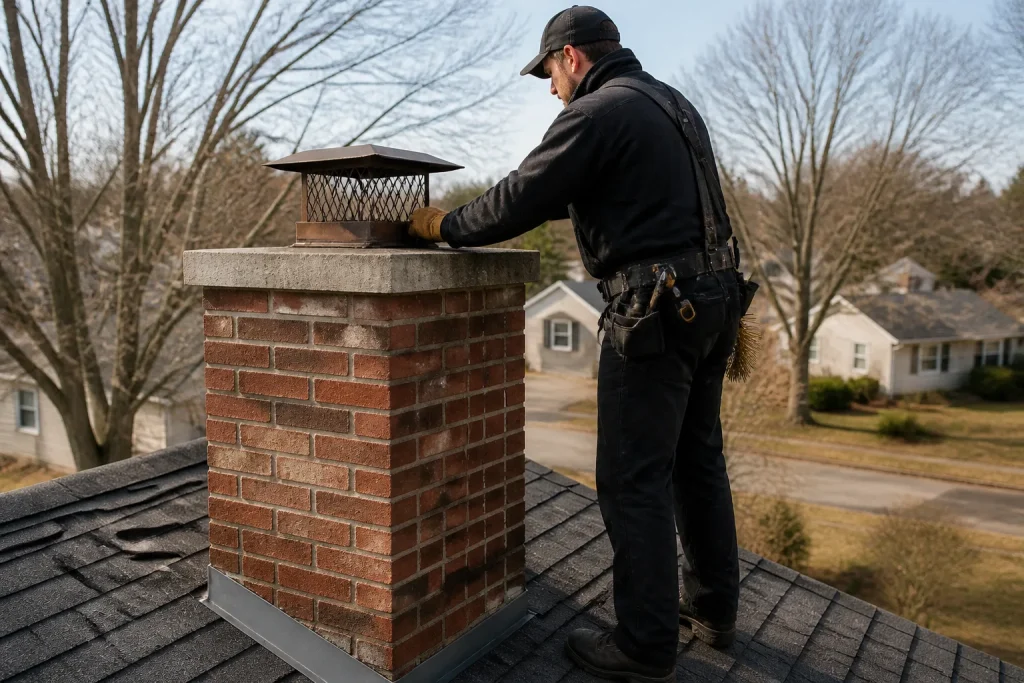
Emergency Chimney Sweep Near Me: What University City Homeowners Should Do First
A chimney fire can burn above 2,000°F and be over in minutes, sometimes without anyone in the house knowing it happened. The soft popping sound and the sudden stronger draft that many people shrug off as “the fire catching” are two of the most commonly missed signs that something has already gone wrong. Before you search for an emergency sweep, there’s a short sequence of steps that decides whether a professional arrives to clean a chimney or to assess structural damage. If you’d rather not sort through that on your own, call (855) 658-5324 and we’ll walk you through it.
What Actually Counts as a Chimney Emergency in University City?
An emergency is anything involving active fire, uncontrolled smoke where it shouldn’t be, or a structural failure that makes the chimney unsafe to use. Everything else is urgent but not an emergency, and the two get different first responses. Getting that distinction right saves you a panicked call and, in some cases, a much larger repair bill.
Here’s how the situations sort out:
- Chimney fire (active or suspected): Get everyone out of the house, close the firebox door if you can do it safely, and call 911 first. Fire departments respond to chimney fires as structure fires, not as cleaning jobs. You can also call us at (855) 658-5324 to ask what to do while you wait, or to ask what to do after.
- Heavy smoke backing into the room with no fire burning: Check that the damper is open and the flue isn’t blocked by a nest or debris. This is urgent but usually not a 911 matter unless smoke is filling the house.
- Animal intrusion (birds, squirrels, raccoons in the flue): Don’t light a fire. A blocked flue forces carbon monoxide back into the living space. Call for a sweep and inspection before the fireplace is used again.
- Strong smoky odor in an upstairs room, no fire burning: Usually a pressure or drafting issue, sometimes a blocked or deteriorated flue. Worth an inspection, rarely a same-hour emergency.
- Visible damage to the crown, cap, or masonry after a storm: Photograph it, keep water out, and book an inspection. Structural chimney repair is planned work, not an emergency call.
In our experience, most “emergency chimney sweep” searches in University City fall into that middle category: real problems that deserve prompt attention but not sirens. The exception is an actual fire, and that call goes to 911 first.
The First Five Minutes: What to Do Before You Call Anyone
If you smell smoke in a room where no fireplace is burning, or see flames or sparks at the top of the chimney, act in this order. These steps protect your house and give the responding professional the information they need.
- Call 911 if you see flames, sparks, or heavy smoke from the chimney top. That is a fire, not a maintenance issue.
- Close the damper only if the fire in the firebox is fully out and you can reach the handle safely. An open damper feeds air to a fire in the flue; a closed one cuts off oxygen.
- Leave the firebox door shut. A glass door on a wood stove or fireplace insert contains heat and keeps embers inside. Don’t prop it open “to let it breathe.”
- Note any smoke or smell in upstairs rooms, closets, or attic spaces. Smoke that shows up far from the fireplace is a clue to where the breach is. Write it down. Your technician will ask.
- Walk outside and look at the chimney top and roof. Visible flame, sparks, or a shower of black debris means an active fire. Creosote flakes on the roof are a sign of a recent one.
What matters most is what you don’t do. Don’t throw water into a hot firebox, don’t try to climb on the roof to look down the flue, and don’t attempt to clean the chimney yourself after a suspected fire. A flue that just burned through a creosote layer is weakened, cracked, or both, and the heat coming off it is genuinely dangerous. That’s a job for trained eyes and proper equipment.
Why a General Handyman or HVAC Tech Is the Wrong Call After a Chimney Fire
A chimney emergency is not an HVAC call. When a general contractor or handyman documents a post-fire chimney, you can end up with a repair record your insurer won’t accept, and a liability question with no clean answer if the fireplace is used again and something goes wrong. Chimney work has its own standards, its own inspection levels, and its own documentation.
Here’s the practical problem. A Level II inspection after a fire is a camera-based evaluation of the entire flue from the firebox to the crown. Many carriers require that inspection, with photographic documentation, before the fireplace can be used again. A generalist won’t produce it, because they don’t carry the equipment or follow the standard. You end up paying twice: once for the wrong visit, and again for the inspection you needed in the first place.
This is where a specialist’s paperwork earns its keep. Chimney Sweep University City works with the same professional-grade brands certified chimney specialists across the country use, including DuraFlex and HeatShield. Those materials come with manufacturer documentation that ties the repair to a product and an installation method. When an adjuster reviews a claim, that paper trail answers the question every insurer asks: who did the work, and to what standard?
In University City, where mature housing stock and older masonry chimneys are common, we’ve seen plenty of fire-damaged flues that had been patched once and needed a proper re-evaluation the second time. The lesson repeats: get the documented inspection before anyone touches the chimney.
What a Level II Post-Fire Inspection Covers (and a Sweep Doesn’t)
A standard sweep removes creosote, soot, and debris, then reports what was visible. A Level II inspection evaluates the condition of the entire flue with a camera, going well beyond what a brush can see. After a fire, the inspection is the point, and the cleaning is secondary.
The Level II covers:
- The full interior of the flue, checked with a video camera for cracks, gaps, and warped or separated liner sections.
- The firebox and damper, checked for heat damage, warped metal, or cracks in the masonry.
- The smoke chamber and flue transition, where turbulence and creosote buildup concentrate.
- The exterior: crown, cap, flashing, and masonry joints, checked for cracks that let water in.
- The appliance connection, checked for proper fit and safe venting.
That inspection is also what tells you whether the flue needs a full reline or whether HeatShield ceramic resurfacing can restore it. HeatShield is a ceramic restoration system applied to a damaged flue to rebuild a smooth, sealed interior without a full stainless liner installation; it’s a legitimate cost-saving option on the right chimney, and it’s the kind of call that only comes from a proper inspection. DuraFlex flexible stainless liners handle the cases where resurfacing won’t hold, including older or offset flues where a rigid liner can’t pass. From the firebox floor to the crown, we inspect the whole system, because the fire you had may have stressed parts of it far from where the flames were visible. When the inspection is done, you get the findings and can decide what to do with them.
Related services in University City
If the inspection turns up work, a chimney sweep is usually the first step, followed by fireplace repair for the firebox and damper and chimney cap & crown work if the top of the system took damage. All of it runs through Chimney Sweep University City.
What happens when you call
- 1
A real person answersNo phone trees – you reach a local pro.
- 2
You get an upfront price rangeHonest numbers before anyone is dispatched.
- 3
A background-checked tech heads outLicensed & insured, dispatched right away.
- 4
You approve before work beginsNothing starts until you say go.
What “Same-Day Response” Can and Can’t Include in University City
Honest expectations matter here. A same-day visit can include a safety assessment, a sweep, and documented findings. It cannot include a full reline, and any company that promises one on the same day is either cutting corners or planning to come back anyway.
A reline takes real time. The old liner has to come out, the flue has to be cleaned and measured, and the new system has to be fitted, insulated, and tested. That’s a scheduled job, measured in hours, not a same-day drop-in. What same-day response does give you:
- A professional on site to assess whether the chimney is safe to use.
- A camera inspection with photos you can see and keep.
- A written report of what was found and what it means for your insurance.
- A clear answer on whether the work can safely wait, and for how long.
We answer 24/7, and fast dispatch runs from 7am to 7pm, Sunday through Friday. A call outside those dispatch hours gets booked into the next opening. The estimate is free, and the price is set per job by the written estimate, never by the urgency of the call.
The Bottom Line
If you suspect a chimney fire, call 911 first, then close the firebox door, note where the smoke shows up, and check the exterior from the ground. Once the fire is out, the right next step is a documented Level II inspection, not a quick brush-and-go. A generalist can’t give you the camera evidence or the paperwork your insurer may need, and a specialist can.
Our technicians have up to 8 years of experience, and one call covers diagnosis through completion. We work with DuraFlex, HeatShield, Gelco, and Olympia Chimney materials, and we’ll tell you plainly when a repair can wait. If you’re in University City and need help, Chimney Sweep University City offers free estimates. Call (855) 658-5324. We answer 24/7. Fast dispatch from 7am to 7pm, Sunday through Friday.
Frequently Asked Questions
Common signs include a loud popping or cracking sound, a sudden strong draft, smoke escaping into the room, and creosote flakes on the roof or ground near the chimney. A chimney fire can also happen quietly and leave no obvious trace beyond damage visible on inspection. If you suspect one, don’t use the fireplace again until it’s been inspected. Call (855) 658-5324 to book a Level II inspection.
Yes, a same-day visit is usually possible for assessment and sweeping. A full reline cannot happen the same day, because the flue has to be cleaned, measured, and fitted properly. If you’re booking a reline, expect a scheduled return visit. Call (855) 658-5324 for scheduling and an exact quote.
You need the Level II inspection. A sweep removes debris but cannot see cracks, gaps, or heat damage inside the flue, and many insurers require a documented inspection before the fireplace can be used again. Ask your carrier what they require, then book the inspection. Call (855) 658-5324 for an exact quote; estimates are free.
Often yes, and the documentation matters more than anything else. A camera inspection with photographs, a written report, and manufacturer documentation for any materials used give your adjuster what they need. We can work with your insurer on the paperwork. Call (855) 658-5324 to get the inspection on record.
Written by the team at Chimney Sweep University City.
Need Chimney Cleaning Help?
Call Chimney Sweep University City - the local pro we connect you with is licensed and insured, here with fast help in University City.
(855) 658-5324