
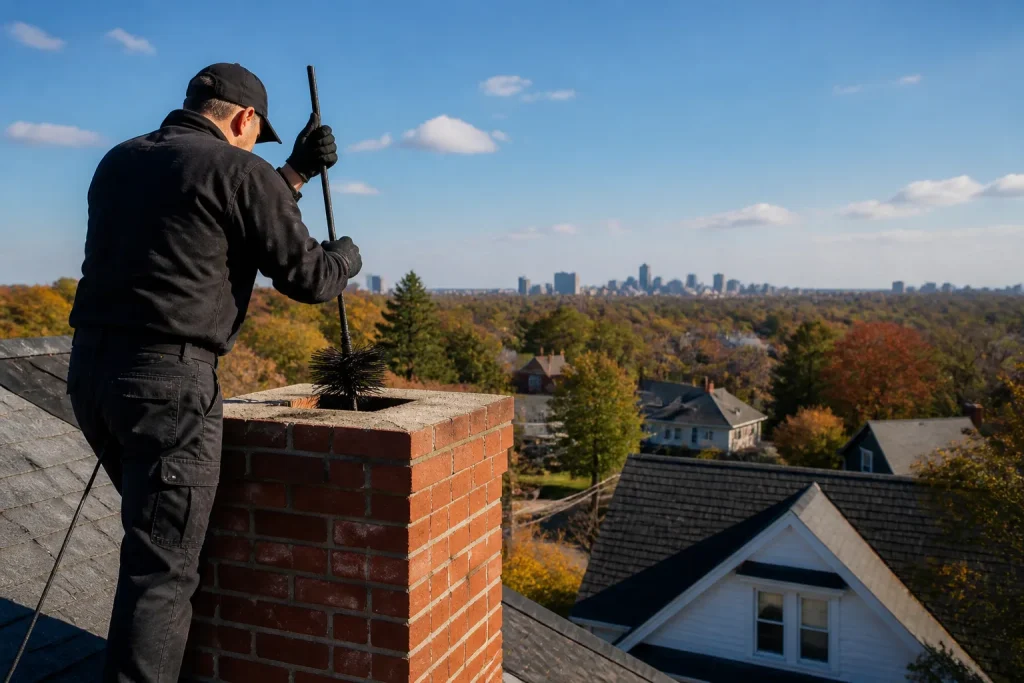
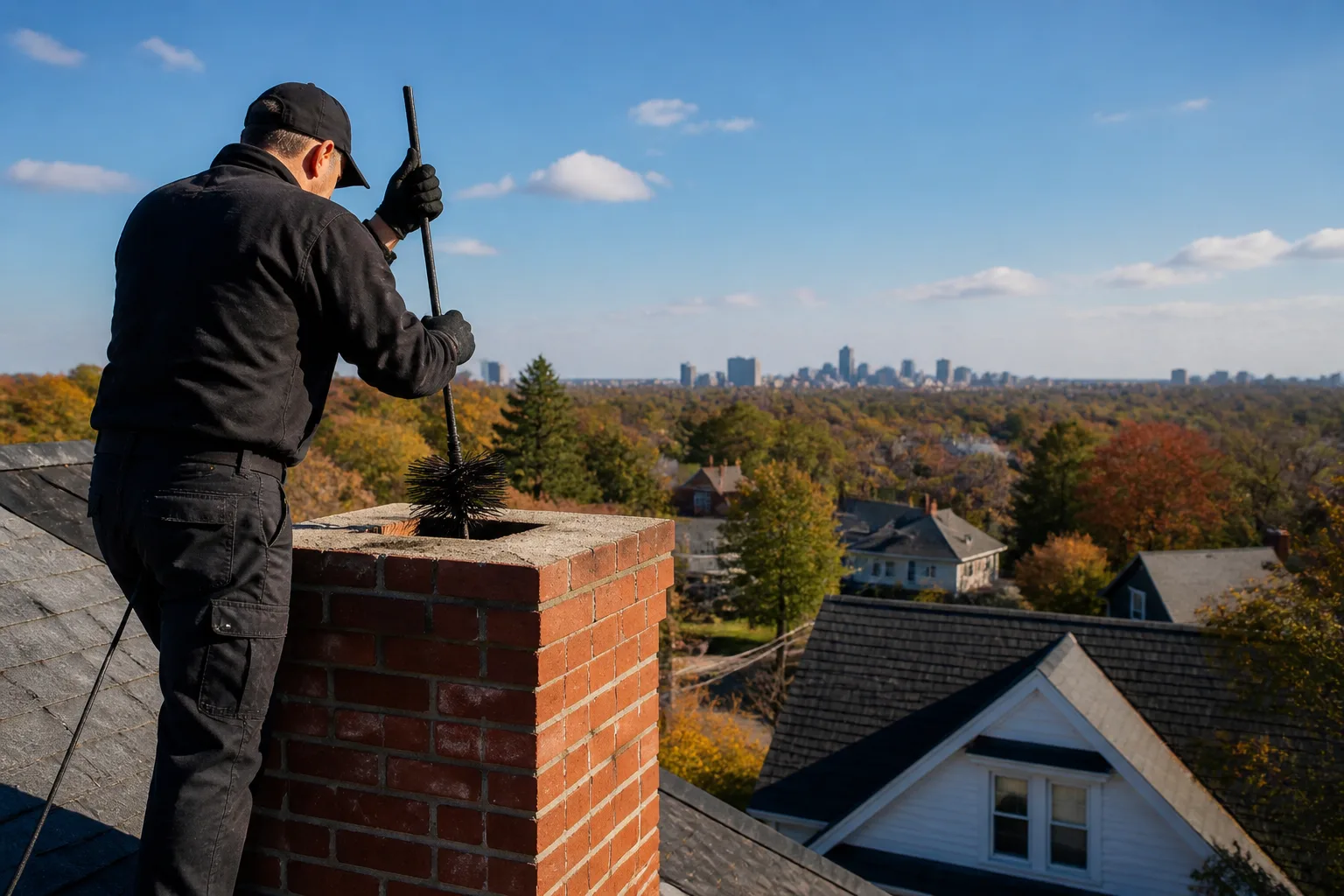
HeatShield Chimney Sweep in University City: A Homeowner’s Guide
Most University City homeowners who call us about a failing flue have already been told they need a full stainless steel reline, and most of them have never heard of HeatShield. When a clay tile liner starts to fail, a stainless reline is a legitimate answer, but it’s not the only one. HeatShield exists for the cases that fall before that threshold, and a lot of sweeps simply don’t apply it. This guide explains the material, the method, and the liner conditions it actually fixes.
What is HeatShield, and why haven’t I heard of it?
HeatShield is a ceramic flue resurfacing system, and the reason you haven’t heard of it is that most chimney companies don’t carry it. It works by rebuilding the inside surface of a clay tile liner rather than replacing the liner itself. The product is a refractory sealant, meaning it’s designed to handle high heat without breaking down, and it’s applied as a paste that cures into a hard, smoke-tight lining inside the flue. For University City homes with original clay tile liners, it opens a repair pathway that sits between “do nothing” and “tear the whole thing out.”
The material matters. HeatShield is a proprietary ceramic compound with a UL listing as a flue restoration system, and that listing is why a properly applied job carries a manufacturer warranty. It bonds mechanically to the clay tile and fills the gaps between tiles so the flue becomes a continuous surface again. If a sweep tells you your liner is “failing” but can’t name a specific product, ask them what they would use and why. A straight answer is a good sign. A vague one usually means they’re selling a reline because that’s the only tool they have.
What liner conditions does HeatShield fix, and what needs a full replacement?
This is the question that decides whether HeatShield is right for your chimney. Not every failed liner can be resurfaced, and a good technician will tell you plainly when the honest answer is a full reline. The line falls between surface-level joint failure, which HeatShield handles, and structural failure, which it doesn’t.
HeatShield is a fit for:
- Hairline gaps and open joints between clay tiles, where flue gases can leak into the chimney structure
- Spalling or pitting on the tile faces that hasn’t compromised the tile’s thickness
- Minor cracks that run through individual tiles without displacing them
- Flues where the liner is intact but no longer smoke-tight
HeatShield won’t work when:
- Tiles are collapsed, broken out, or missing entirely
- The flue has offset sections the sizing form can’t pass through
- The chimney has a structural problem that needs addressing first, like a failed crown letting water in
- The flue is undersized or unlined, where a stainless liner is the code-compliant answer
In our experience, the deciding factor is the video inspection. That’s why we treat the sweep and the inspection as one job. A camera going up a clean flue shows us exactly which condition we’re dealing with, and we can show you the same footage so you see what we see. Nothing gets recommended that you can’t verify on screen.
How is HeatShield applied, step by step?
A proper HeatShield installation is a sequence, not a spray. Skipping the front end of it is how jobs fail, which is why the process below matters more than the product name on the bucket. Here’s what a correct application looks like in a University City home:
- 1
Pre-sweep. The flue is brushed clean of soot, creosote, and glaze. Sealant won’t bond to a dirty surface, so this step isn’t optional.
- 2
Video inspection. A camera confirms the liner condition, measures the flue, and identifies any offset or obstruction the sizing form has to clear.
- 3
Sizing the form carrier. The application tool is sized to your flue’s dimensions, so the sealant reaches every tile joint evenly.
- 4
Pulling the sealant through. The specialized carrier is pulled up the flue, pressing the ceramic material into the joints and across the tile faces as it goes.
- 5
Cure time. The flue is left to cure before the fireplace goes back into service. Rushing the cure is a common shortcut that undermines the result.
The whole process happens from the top down and typically takes less than a full day, depending on flue length and how much joint repair is needed. You’ll want to plan on not using the fireplace until the cure is confirmed.
Why does the sweep have to happen before the HeatShield application?
HeatShield is a resurfacing system, not a cleaner. It has to go onto a clean, dry, structurally sound surface or it simply won’t hold. If there’s soot, creosote, or glazed deposits on the tile, the sealant can’t bond, and the job will fail early. That’s the whole reason the cleaning and the application have to be treated as one integrated service rather than two separate bookings.
This matters more in University City than a lot of homeowners realize. Our summers run humid, and clay tile liners are porous. A liner that’s been sitting with moisture and soot combined is exactly the kind of surface that needs a proper pre-sweep before anything gets applied. The condition of the flue after brushing tells us whether HeatShield is even viable that day, or whether the liner needs to dry first. It’s not a sales step. It’s the base coat on a paint job: skip it and everything on top of it comes off.
We also use that pre-sweep to check the rest of the system. From the firebox floor to the chimney crown, we service the entire system, and the sweep is where we catch the things a HeatShield job won’t fix on its own, like a failing crown or a missing cap letting water in.
HeatShield vs. a stainless steel liner: which makes sense for your University City home?
Neither one is “better” in the abstract. They solve different problems. HeatShield restores a liner that’s still structurally intact; a stainless reline replaces the liner entirely. The right choice depends on what the video inspection actually shows.
A full stainless steel reline typically runs $2,500 – $6,000 depending on flue length and configuration, and that’s a hard cost to absorb. With a DuraFlex flexible liner system, a trained specialist can handle older or offset flues that a rigid liner won’t clear, so it’s a technical job, not a basic sweep service. HeatShield application is generally a lower-cost pathway when the liner qualifies, because you’re rebuilding the existing surface rather than installing new material wall to wall. The trade-off is that HeatShield only works on liners that meet the condition criteria above. When we recommend HeatShield, it’s because the inspection says a reline would be overbuilding. When we recommend a reline, it’s because resurfacing would be putting a coat of finish on a wall that’s coming down.
Either way, the written estimate sets the final price. That’s the number that matters, not the range you read online.
What about the warranty, and how does it compare to a stainless liner?
The manufacturer warranty on a properly applied HeatShield system is 10 years, which is a real number and worth weighing against the alternatives. A stainless liner generally gives you decades of service, and the original clay tile, when it was sound, was built to outlast most of what’s around it. The honest comparison is this: HeatShield buys you a solid repair that puts off the full reline, and at roughly half the cost of a reline in the qualifying cases, that’s a meaningful number for a lot of households.
What the warranty depends on is the installation. An application done without a proper sweep, without a video inspection, or with a form that doesn’t suit the flue won’t perform the way it should, and that’s not a material failure, it’s an installation one. The warranty holds when the prep was right. If a chimney company offers to skip the inspection and “just apply it,” walk away. That’s not how it’s meant to be done.
Related services in University City
If you’re at the point of a repair, we also handle fireplace repair and chimney cap & crown work to keep water off the liner you’re about to repair. A crown in good shape is part of what makes a HeatShield application last.
When should you call a pro instead of waiting it out?
Some chimney conditions can safely wait. A flue with a light film of soot and a sound liner can hold until the next sweep. But a liner with open joints is not something to sit on, because flue gases and heat can escape into the chimney structure where they weren’t meant to go. That’s a carbon monoxide and chimney fire risk, and it doesn’t get better on its own.
If you smell smoke in the house when the fireplace is running, if you see crumbly material or flaking tile inside the firebox, or if your last sweep recommended a liner and didn’t offer you a resurfacing option, it’s worth a second look. We answer 24/7 and dispatch from 7am to 7pm, Sunday through Friday, so a call gets booked quickly. Our technicians have up to 8 years of experience, and they’ll show you the footage rather than ask you to take it on faith.
The Bottom Line
HeatShield is a ceramic resurfacing system that can restore a clay tile liner with early-to-moderate joint failure, avoiding a full stainless reline in the cases that qualify. It won’t fix collapsed tiles, offset sections, or a structurally failing chimney, and a proper video inspection is what separates those two situations. The sweep comes first because the sealant needs a clean, sound surface to bond to. If you’re in University City and you want a straight answer on which pathway your liner actually needs, Chimney Sweep University City offers free estimates. Call (855) 658-5324. We answer 24/7, with fast dispatch from 7am to 7pm, Sunday through Friday.
Frequently Asked Questions
It’s typically less than a full stainless reline, which runs $2,500 – $6,000 depending on flue length, though the exact number depends on the condition of your flue and the amount of joint repair required. The written estimate sets the final price after the inspection. Call (855) 658-5324 for an exact quote. Estimates are free.
That depends entirely on the liner condition under a camera inspection. Hairline gaps, open joints between tiles, and surface spalling can often be resurfaced with HeatShield. Collapsed tiles, offset sections, and flues that were never properly lined need a full replacement. We show you the footage so you can see which one you’re dealing with. Call (855) 658-5324 and we’ll get you on the schedule.
Most applications are completed in under a day, depending on flue length and how much joint repair is needed, plus the cure time before the fireplace goes back into service. The pre-sweep and video inspection are done first so the application isn’t a separate visit. Call (855) 658-5324 to book the inspection and sweep together.
Open joints in a clay tile liner allow heat and flue gases to escape into the chimney structure, which raises both chimney fire and carbon monoxide risk. It’s not a cosmetic issue and it doesn’t resolve on its own. Call (855) 658-5324 and get the flue inspected before the next burning season.
Written by the team at Chimney Sweep University City.
Need Chimney Cleaning Help?
Call Chimney Sweep University City - the local pro we connect you with is licensed and insured, here with fast help in University City.
(855) 658-5324