
Chimney Sweep: Repair or Replace? How University City Homeowners Decide
When a chimney company tells you after a sweep that you need a full chimney replacement, that could mean one of two things: the system has genuinely failed, or the quote is for a scope that could be broken into three prioritized repairs. In our experience, the second is more common than homeowners expect. The repair-or-replace question is rarely one decision. It’s a series of component-level decisions, each with its own logic.
If you’d rather have a trained eye look at the whole system before you make any calls, call (855) 658-5324. We answer 24/7. Fast dispatch from 7am to 7pm, Sunday through Friday.
Why a Single Quote for “Chimney Work” Is a Bad Starting Point
A chimney is not one thing. It’s five separate assemblies stacked into one structure, and they age at different rates for different reasons. A crown that’s cracking from freeze-thaw cycles says nothing about the condition of the flue liner inside it. A firebox with eroded mortar joints doesn’t mean the exterior masonry is failing. Homeowners in University City who get one lump quote for “chimney work” lose the ability to spot which part of that quote is doing the heavy lifting.
The five components worth evaluating separately:
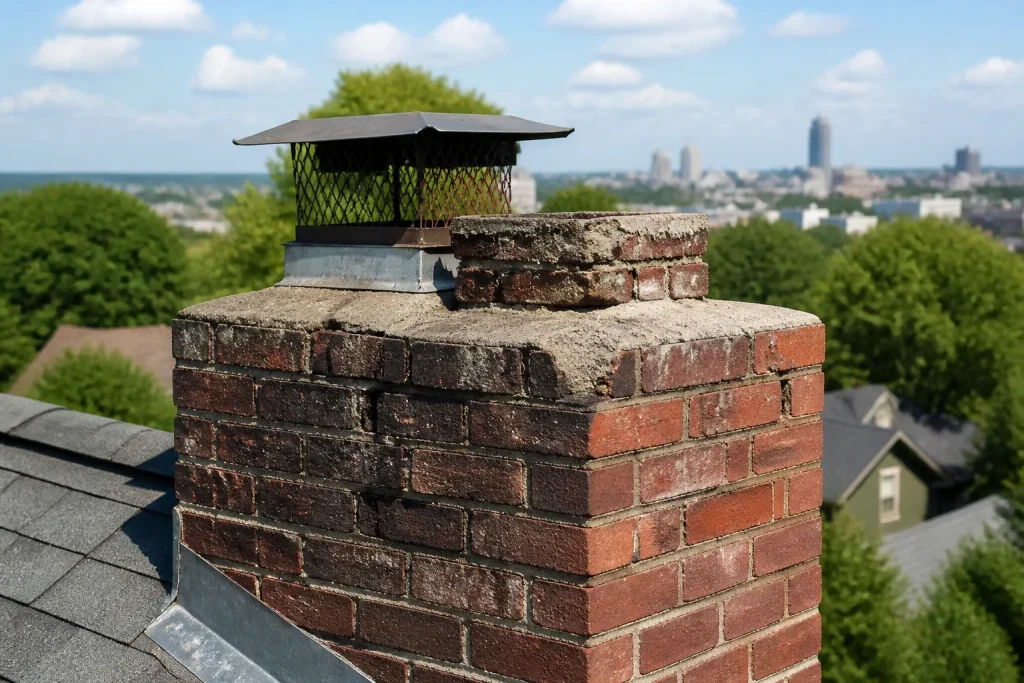
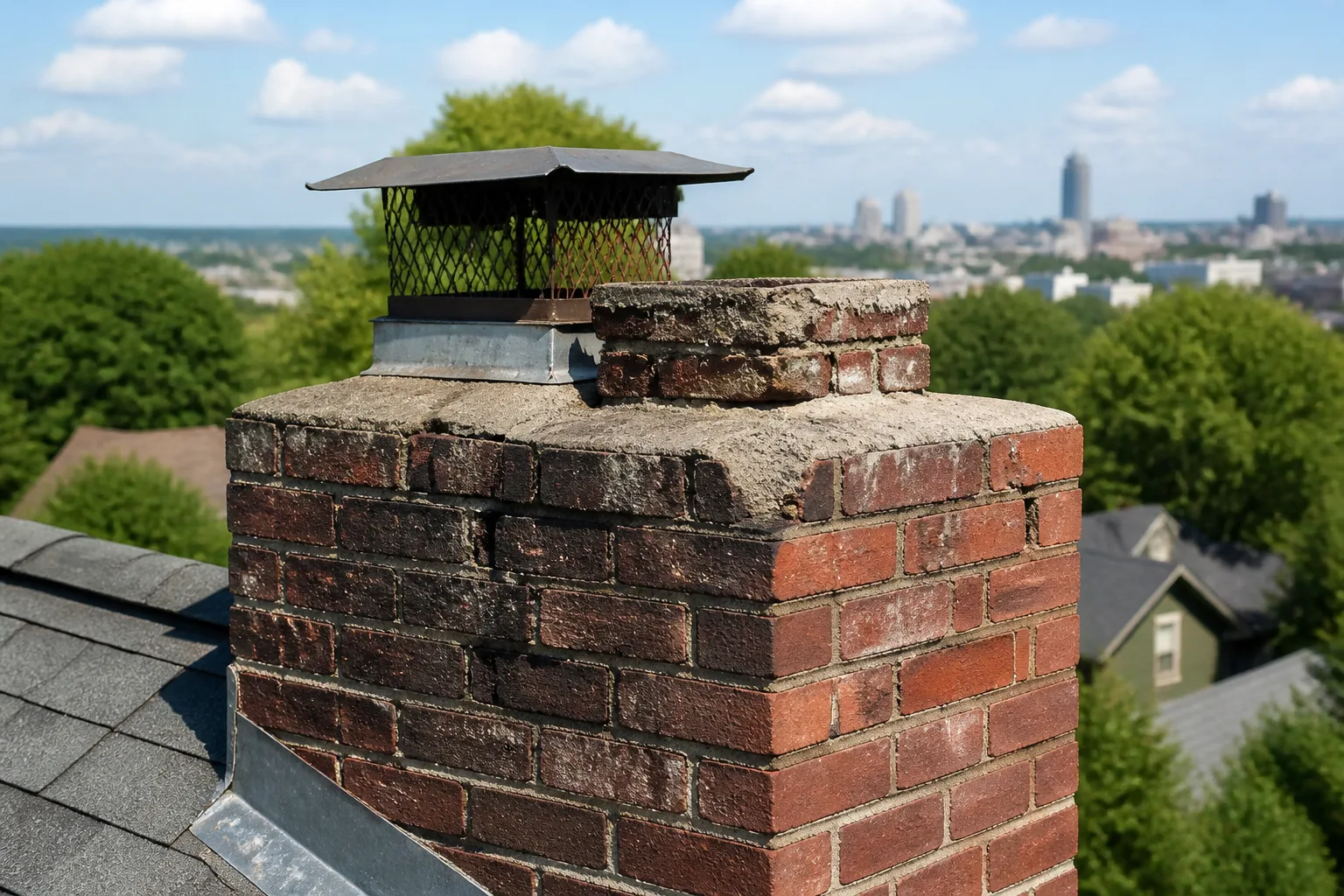
- Chimney cap – the cover on top that keeps rain, animals and debris out of the flue. Typically the cheapest component to replace and the one with the most immediate protective value.
- Crown – the concrete or masonry top surface that sheds water away from the stack. Crown repair is usually a modest repair; crown failure left alone turns into masonry failure below it.
- Flue liner – the clay tile or metal lining that carries smoke and gases out of the house. This is where the repair-versus-replace decision carries the most weight and the most cost.
- Firebox and smoke chamber – the masonry chamber where the fire sits and the sloped section above it that guides smoke into the flue. Both can often be resurfaced rather than rebuilt.
- Exterior masonry – the visible brick or stone stack. Repointing and spot repairs are routine; a full rebuild is reserved for structural failure, not cosmetic wear.
Evaluating each one separately lets you prioritize. Replacing a cap this year and relining next year is a real plan. Calling the whole system a write-off is not the same decision.
How Do You Decide Between Liner Repair and Liner Replacement?
Liner repair is viable when the existing flue structure is intact but the interior surface has cracked, spalled or eroded. A ceramic resurfacing product like HeatShield is applied to the inside of the flue to restore a smooth, sealed surface without removing the existing liner. That’s a real option for a liner that’s structurally sound but no longer gastight. Full liner replacement is required when the original liner has separated, collapsed, or is missing entirely, or where the flue is unlined and the appliance needs a properly sized liner to meet code.
The reference point here is not opinion. CSIA inspection standards and NFPA 211 set out what constitutes a compliant flue, and a liner that no longer meets those standards has to be addressed before the fireplace goes back into service. The standards distinguish between a liner that needs to be made gastight again and a liner that is no longer a liner at all.
This distinction is exactly why a proper inspection matters. A sweep alone tells you the flue is dirty. A video inspection tells you whether the tile is cracked in a way resurfacing can restore or whether the liner has failed structurally. Our technicians have up to 8 years of experience doing this, and the difference between the two diagnoses is visible on camera, not guessable from the firebox floor.
Why a Level II Video Inspection Is the Foundation of Any Repair-or-Replace Decision
A Level II inspection with video documentation is the only way to make an evidence-based repair-or-replace decision. Without it, you’re working blind. Homeowners who skip inspection and collect three quotes are choosing between three people’s guesses about a flue none of them have actually seen from the inside.
A video inspection gives you three things that matter:
- A record of what’s actually there. Cracks, gaps, offsets, spalling and debris are documented on camera, not described from memory.
- A shared reference point. When a technician says the liner needs replacement, the footage shows why. When they say it can be resurfaced, the footage shows that too. You’re not taking anyone’s word for it.
- Documentation for insurance. If there’s been a chimney fire, water intrusion or storm damage, an inspection report with photos is what an adjuster needs. A verbal assessment from someone who came out and looked up the flue won’t carry the same weight.
In our experience working in University City, the most useful thing we can hand a homeowner after a sweep is not a quote. It’s the photographs. The quote is easier to evaluate when you can see the crack yourself. A chimney sweep is the first step; a proper inspection is where the actual decisions get made.
What Does a Phased Repair Plan Look Like Against a Full Rebuild?
A phased repair plan usually makes financial sense when the structural shell of the chimney is sound and the failures are in the protective components. A full rebuild makes sense when the masonry stack itself has failed structurally, or when the cost of repairing components individually starts to approach the cost of rebuilding the whole system.
The typical logic looks like this:
- Phased approach: crown repair in year one, relining in year two, repointing in year three. Each stage addresses a real deficiency and extends the system’s usable life. Sensible when you plan to stay in the home and when the masonry exterior is structurally okay.
- Full rebuild: warranted when the stack itself is leaning, when multiple components have failed simultaneously from a single cause like a chimney fire or long-term water intrusion, or when the home’s masonry shows signs of ongoing structural movement.
- Component replacement only: the cap and crown alone, done as preventive work on a system that’s otherwise in good condition, is a different budget entirely and usually the right call for a chimney that’s been maintained.
For a University City home, planned occupancy matters as much as the system’s condition. If you’re moving in a year and the chimney is serviceable, a phased plan is reasonable. If you’re staying for fifteen years, investing in a full relining with a flexible stainless system like DuraFlex, or a cap and crown replacement using products like Gelco or Olympia Chimney, makes more sense as a single project than as three separate repairs over five years.
When to Call a Pro
Some checks are doable from the ground. You can see a cracked crown from your driveway. You can see a missing cap. You can see spalling brick on the exterior stack. What you can’t see is the inside of the flue, the condition of the smoke chamber above the damper, or whether the liner has gaps at the joints. That’s what an inspection is for, and it’s the step most homeowners skip when they go straight to getting quotes.
If you’ve had a chimney fire, if you smell smoke in the house when the fireplace isn’t running, or if you’ve noticed water staining in the firebox or on the chimney breast in the room, call a professional before lighting another fire. Those symptoms point to conditions that a visual check from the hearth won’t resolve. Same goes for any flue that’s never been inspected, since an unlined or failing liner is not something you want to discover from the smell of exhaust in a bedroom.
Related services in University City: chimney cap & crown work for the preventive side of the system, and fireplace repair for firebox and damper issues.
Does Homeowner’s Insurance Cover Chimney Damage?
Chimney damage from a sudden event is more likely to be covered than damage from deferred maintenance. That distinction matters, and the documentation you have in hand is often what decides which side of it a claim lands on. A chimney fire, a lightning strike, a falling limb or a storm event are the kinds of causes insurers typically look at seriously. Long-term water intrusion from a failed crown, a chimney that’s been pulling in moisture for a decade, or a liner that’s simply worn out is usually treated as maintenance the homeowner was responsible for.
The practical lesson is that an inspection report with photographs is not just useful for the repair decision. It’s what allows an adjuster to see the condition of the chimney before and after a specific event. A verbal assessment that the liner is cracked after a chimney fire says less than a documented inspection showing the condition of the flue, the location of the damage, and the condition of the surrounding components.
We can work with your insurer. We don’t bill them directly, and we can’t tell you what a policy covers, but the report we produce after an inspection is written to be read by an adjuster as well as a homeowner.
What Are the Key Takeaways for University City Homeowners?
- The repair-or-replace question is really five separate decisions: cap, crown, liner, firebox and masonry exterior. Evaluate each one on its own.
- Liner resurfacing with HeatShield is a real option for a structurally intact flue; full relining is required when the existing liner has failed. CSIA and NFPA 211 set the standard.
- A Level II video inspection gives you the evidence to make the decision yourself, and documents the condition for insurance purposes.
- A phased repair plan is often the right call; a full rebuild is warranted when the stack itself is compromised.
- It’s easier to make these decisions when you’re looking at the footage rather than listening to a contractor’s summary of it.
The Bottom Line
Most chimneys that get quoted for a full rebuild don’t actually need one. They need a crown that sheds water, a liner that’s been restored or replaced, and a cap that keeps weather out. Knowing how to break the system into its components and evaluate each one gives you the ability to spot which parts of a quote are doing real work and which are padding. If you’re in University City and need help figuring out which part of your chimney actually needs attention, Chimney Sweep University City offers free estimates. Call (855) 658-5324. We answer 24/7. Fast dispatch from 7am to 7pm, Sunday through Friday.
For a broader look at what we service across the whole system, start at Chimney Sweep University City.
Frequently Asked Questions
The answer depends on which component is failing. A cracked crown or missing cap is a repair. A structurally failed masonry stack may warrant a rebuild. The flue liner sits in between: resurfacing is possible when the liner is intact but eroded, and full replacement is required when it has separated or collapsed. A Level II inspection with video is how you tell the difference.
Yes, in many cases. A ceramic resurfacing product like HeatShield can restore a smooth, sealed surface inside a structurally intact flue without removing the existing liner. That works when the tile is cracked, spalled or eroded but still in place. It’s not appropriate when the liner has separated, collapsed, or the flue is unlined and needs a properly sized stainless liner like DuraFlex to meet code.
It depends on the cause. A chimney fire, lightning strike or storm damage is likely to be treated differently from long-term water intrusion or deferred maintenance. The documentation you have matters: an inspection report with photographs is far more useful to an adjuster than a verbal assessment. Call (855) 658-5324 to schedule an inspection and we’ll provide a report you can share with your insurer.
The CSIA standard is an annual inspection for any chimney that’s used regularly, with a sweep as needed based on what the inspection finds. A homeowner who burns a cord of wood a year and a homeowner who lights three fires a season will need different intervals. The annual inspection is what determines whether a sweep is actually necessary that year or can wait. Our technicians have up to 8 years of experience evaluating exactly this question, and we’ll tell you straight when work can wait.
Written by the team at Chimney Sweep University City.
Need Chimney Cleaning Help?
Call Chimney Sweep University City - the local pro we connect you with is licensed and insured, here with fast help in University City.
(855) 658-5324