
Last updated November 22, 2026
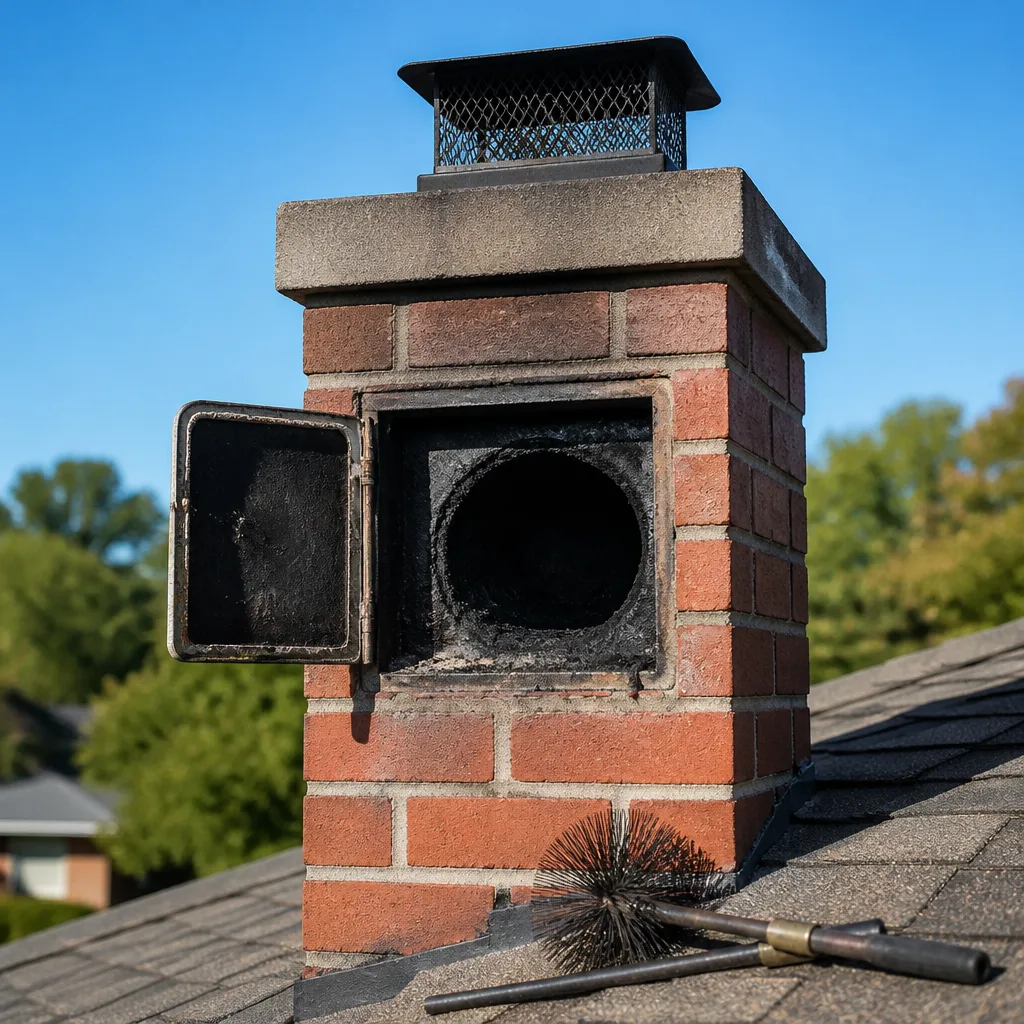 Sweep & inspection
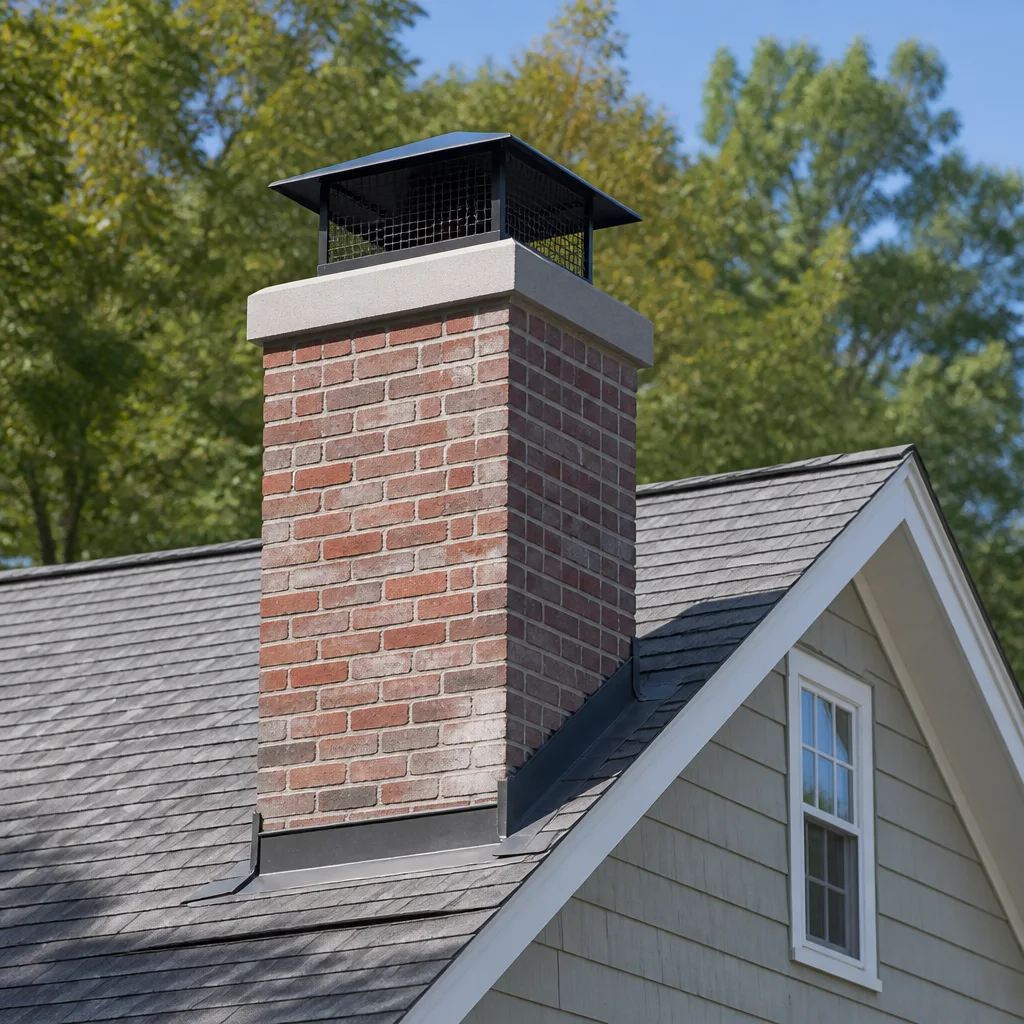 Caps & crowns
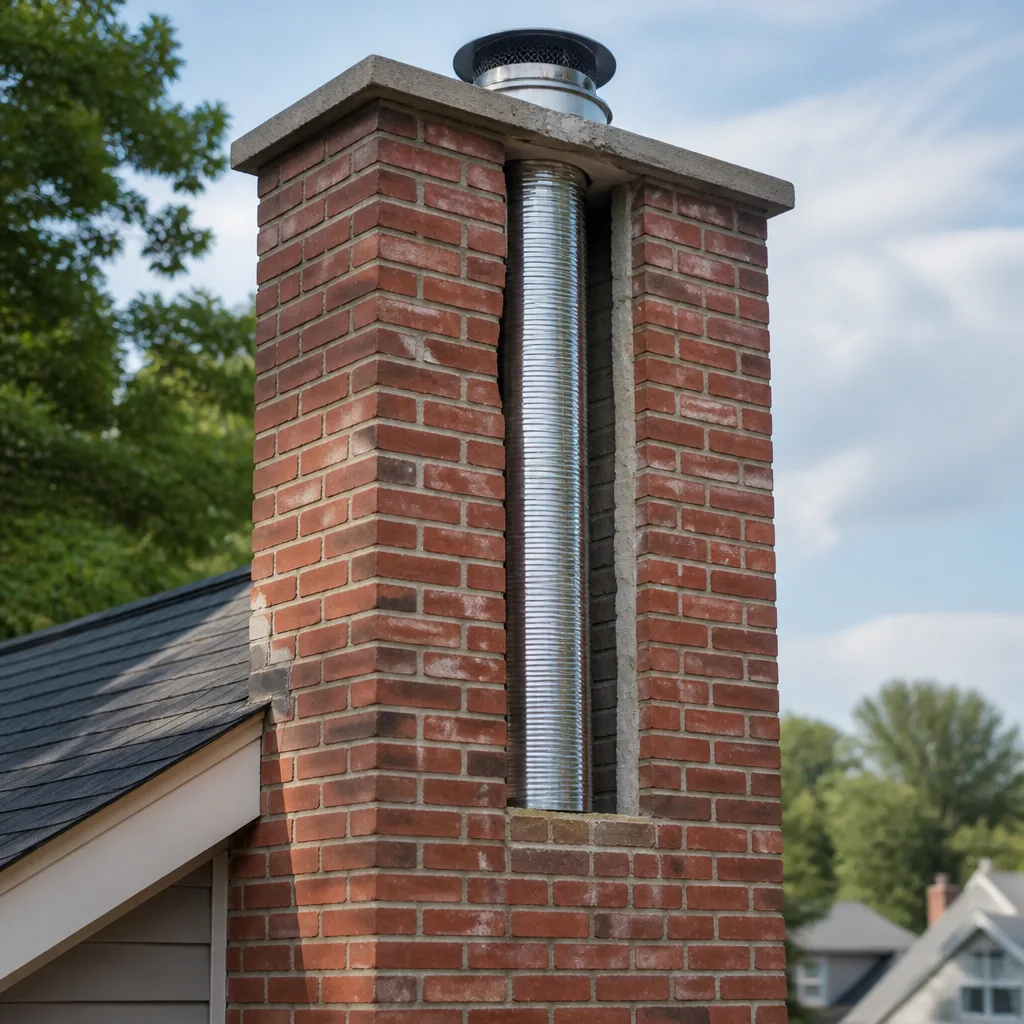 Flue relining
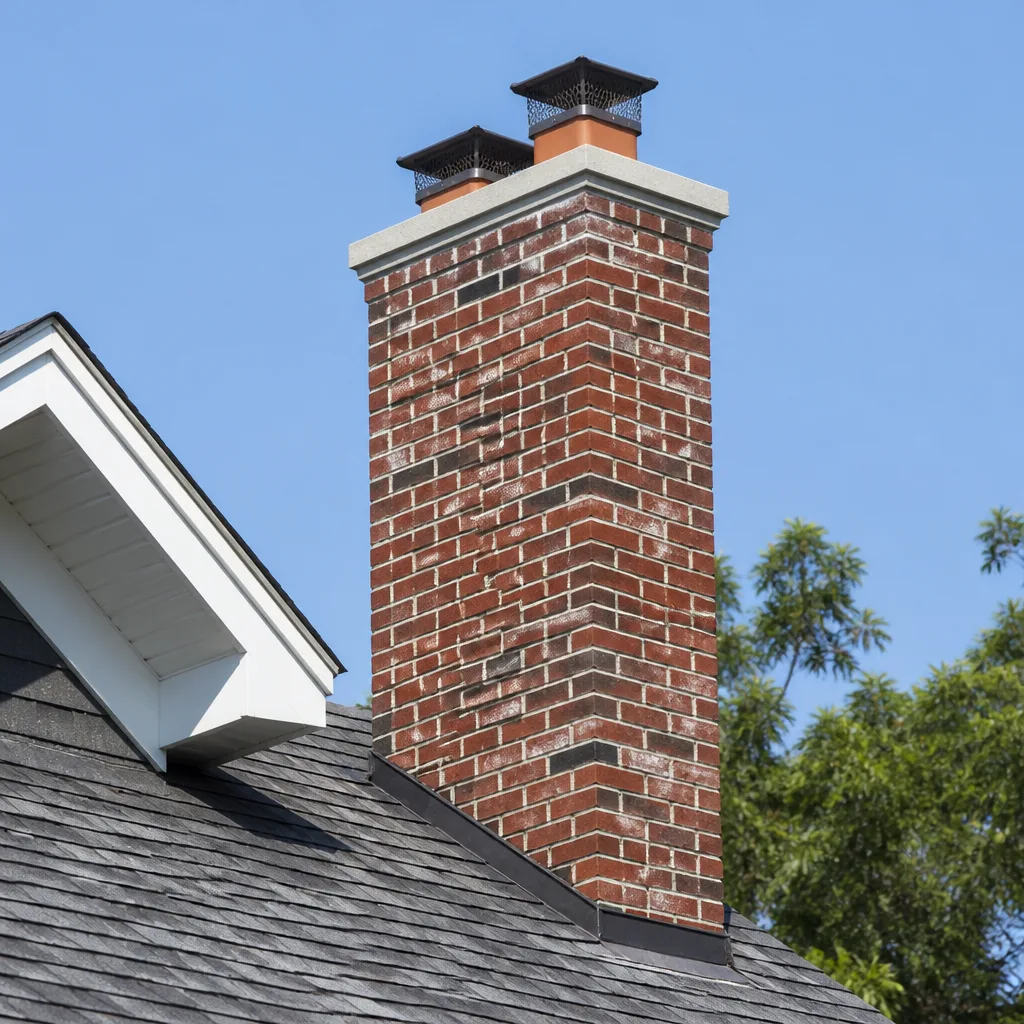 Masonry repair
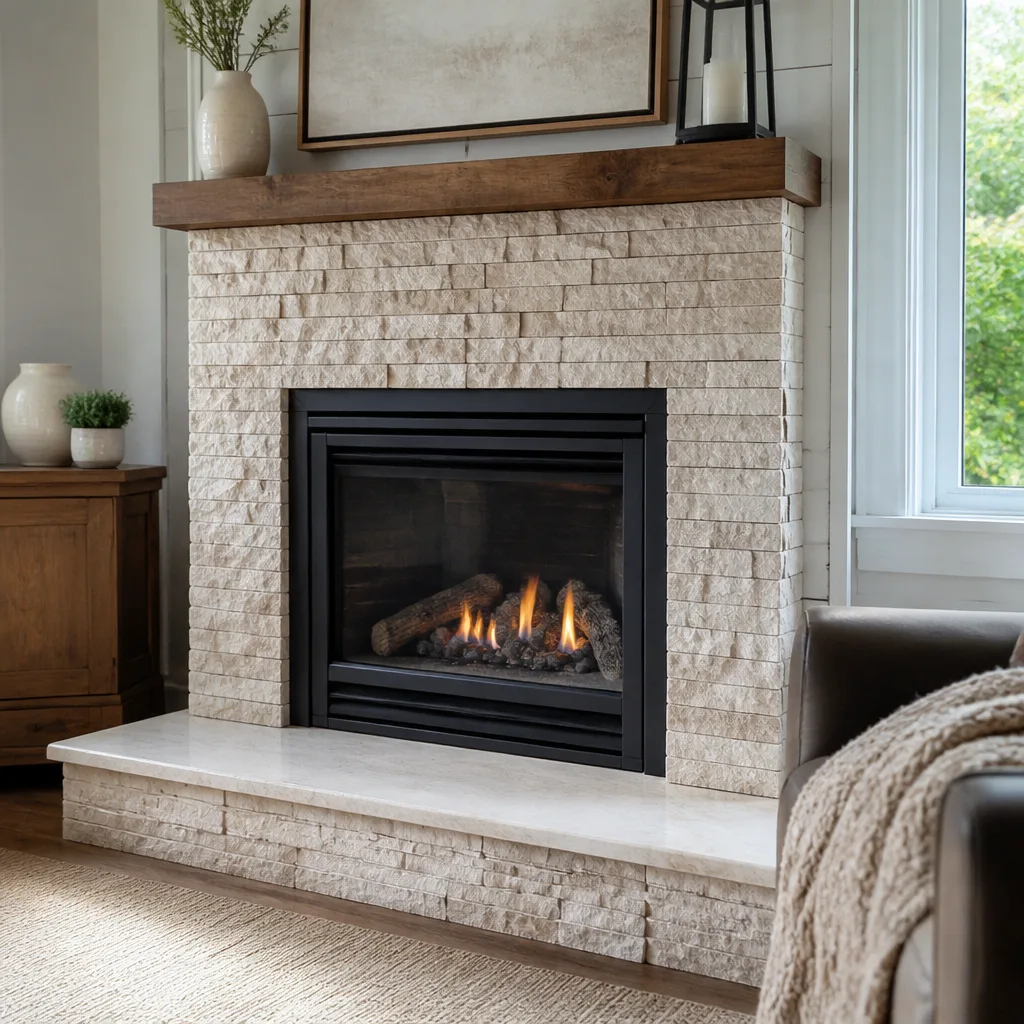 Gas fireplace service
Level 1 sweep and inspection to the NFPA 211 annual standard - flue, crown, cap, and flashing checked and photographed
Chimney sweep logs do not sweep chimneys. They loosen some creosote - which then falls where a brush and vacuum still have to collect it.
DIY vs Professional Chimney Cleaning: The University City Homeowner’s Decision Guide
A homeowner who buys a brush kit and cleans their own flue hasn’t necessarily done anything wrong. But they’ve also done nothing to evaluate whether their liner is cracked, whether the crown is failing, or whether the black, tar-like glaze on the flue walls is the kind of creosote a brush won’t touch. That’s the part the tutorials skip. The brush goes up, the soot comes down, and the homeowner has no idea whether the system they just cleaned is actually safe to burn in. This guide is written from University City, where a lot of homes run wood-burning fireplaces and inserts through the cooler months, and where the gap between “swept” and “inspected” matters more than most people realize. We’ll lay out the exact, narrow conditions where DIY is defensible, what it structurally misses, and how to weigh the real savings.
Quick Answer
DIY chimney cleaning is reasonable only when four conditions are all true at once: your system was recently inspected and documented as sound, you burn seasoned hardwood, your annual use is low, and you have a straight single flue off the firebox. In every other case, DIY removes surface soot but leaves the structural and diagnostic work undone. A professional sweep in University City pairs the cleaning with a camera inspection, so you get both the cleared flue and the answer to whether the flue was safe to begin with.
Styles & brands we work with
- Sweep & inspection
- Caps & crowns
- Flue relining
- Masonry repair
- Gas fireplace service
Table of Contents
- What DIY Chimney Cleaning Actually Accomplishes
- What DIY Misses Structurally
- The Specific Scenario Where DIY Is Defensible
- Why the Savings Math Changes When Diagnosis Is Included
- DIY Chimney Work, Home Sales, and NC Disclosure
- How a Professional Sweep Actually Works
- University City Climate and Burn Season
- Understanding Creosote Stages and Why It Matters
What DIY Chimney Cleaning Actually Accomplishes
DIY chimney cleaning accomplishes one thing well: it removes Stage 1 creosote and loose soot from the accessible walls of a straight flue. That’s real. A homeowner with a proper brush, drop cloths, and a ladder can scrape the soft, flaky deposits off the flue walls of a single-story chimney and get a decent portion of it to fall into the firebox. They can vacuum up what lands and call it done.
What the brush does not do is evaluate anything. It doesn’t tell you whether the liner has a hairline crack that opens up under heat. It doesn’t tell you whether the smoke chamber above the damper is packed with glazed creosote. It doesn’t tell you whether your crown has a gap that’s letting water run down the outside of the flue. It’s a scrubbing tool, not a diagnostic. The brush sees what the flue looks like at the exact line where the bristles touch, and nothing else.
Here’s what you actually accomplish with a DIY brush kit, framed honestly:
- Surface soot removal on a flue you’ve already confirmed is straight and intact via a prior inspection.
- Stage 1 creosote reduction – the soft, flaky, easy-to-remove deposits left by burning wood that wasn’t fully seasoned.
- Debris clearing in the firebox and immediately above the damper.
That’s a real list. It’s just not the whole job, and the parts it isn’t are the parts that matter for fire safety. A chimney sweep is the first step; a chimney inspection tells you what actually needs attention. If you skip the second, you’re guessing.
In University City, where older homes in neighborhoods like University City proper and the surrounding areas of northeast Charlotte often have original masonry chimneys, the number of homeowners who’ve pulled a brush through a 40-year-old flue without ever having the liner looked at is not small. Those chimneys get cleaned but never evaluated. The cleaning looks successful. The evaluation never happened.
What DIY Misses Structurally
DIY cleaning misses everything a camera sees and a brush doesn’t. That’s the short answer. A brush travels down the flue on a flexible rod, and what it touches it cleans, but what it doesn’t touch it doesn’t see. There’s a long list of problems that fall into that category, and most of them can’t be found any other way.
Here’s what a chimney camera reveals that a homeowner brushing from above or below will never find:
- Hairline cracks in a clay tile liner. These are small enough to pass visual inspection from the firebox but open when the flue heats and cool, allowing heat and embers direct contact with the framing around the chimney.
- Offset flue sections. Many older masonry chimneys jog to one side to clear a roofline or a second-floor wall. The offset is where creosote accumulates because the brush can’t follow the angle cleanly.
- Shoulder blockages. Where the flue narrows or where a previous flue tile has shifted, debris can pile up at the shoulder. From the firebox, you see a clean flue. From above, you see a partial blockage.
- Animal nesting in the damper assembly. Birds, squirrels, and raccoons build nests on the smoke shelf or immediately above the damper. These nests block smoke and they can ignite.
- Glazed Stage 3 creosote. The hard, tar-like coating that forms on the flue walls of a chimney burning unseasoned wood or running cool fires can’t be removed by a brush. It requires chemical treatment by a trained technician.
- Cracked or spalling flue tiles. When a clay tile cracks, the crack is often invisible from the firebox side but obvious on camera.
- Crown and cap failures. The crown is the concrete top of the chimney. When it develops a crack, water enters the chimney structure. The cap and crown work that prevents this is invisible from inside the house.
The pattern here is that all of these conditions are diagnosed by looking, not by brushing. A DIY homeowner has the world’s most thorough brush and the world’s least thorough eyes. Without optics, they’re operating on faith that the flue they just cleaned was safe to clean.
If a camera inspection does turn up a cracked liner or a spalling flue, the fix is usually a relining job. That’s where material matters. We install DuraFlex flexible stainless liners for older and offset flues, and we apply HeatShield ceramic resurfacing when the liner is sound enough to restore rather than replace. Both are technical installations that separate chimney specialists from general handymen, and both start with a diagnostic step that DIY skips entirely.
The Specific Scenario Where DIY Is Defensible
DIY cleaning is defensible in one specific scenario, and only when all four of these conditions are met at the same time. If any one of them is missing, the calculation changes.
- You have documented liner condition from a recent inspection. Not “the inspector glanced at it two years ago.” A written report or photo documentation of a sound liner, from a professional who was actually on the roof and in the firebox. Without that, you don’t know what you’re brushing.
- You burn seasoned hardwood. Wood split, stacked, and dried for a full season. The target moisture content is around 20 percent, checked with a moisture meter. Unseasoned wood is the single biggest driver of rapid creosote buildup, and brushing a fast-fouling flue every year doesn’t fix the underlying problem.
- Your annual use is low. A few fires a season for ambiance is very different from burning daily through the winter. Low use means less creosote accumulation per year, which means the annual cleaning is mostly maintenance rather than a real safety intervention.
- You have a straight single flue off the firebox. No offsets, no shoulder, no second flue from a different appliance, no complex smoke chamber geometry. Straight up, straight down, easy to brush, easy to inspect.
If all four of those are true, DIY cleaning as annual maintenance between professional inspections is a reasonable approach. It’s not the same as skipping the inspection, though. Even the well-documented system needs eyes on it periodically, because the conditions that made it safe can change. A crown crack appears. A flue tile spalls. An animal gets in.
In our experience in University City, the homeowners who fit this profile are a small percentage of the ones who actually buy brush kits. The rest have older systems with unknown liner condition, offset flues in one-story ranches and two-story colonials common across University City, and either burn more than they think or burn wood that’s wetter than they think. The defensible scenario exists. It’s just not the common scenario.
For those who do fit the profile, the practical advice is to pair DIY cleaning with a professional inspection every few years. A chimney sweep by a trained technician costs much less than a relining job, and the inspection that comes with it tells you whether what you’re about to brush is safe to brush.
Why the Savings Math Changes When Diagnosis Is Included
The savings math on DIY chimney cleaning is usually calculated on the wrong basis. Folks compare the cost of a brush kit to the cost of a professional sweep, conclude they’ve saved $150 to $300 a year, and move on. That comparison treats the sweep as a cleaning service. It isn’t. It’s a cleaning service plus a diagnostic one, and the diagnostic half is the part that carries the real value.
Here’s the honest way to think about it. A professional chimney sweep in University City typically runs in the range of a couple hundred dollars, and part of what you’re paying for is the camera inspection and a report on the condition of your liner, crown, damper, and smoke chamber. If the inspection finds nothing wrong, you’ve paid for the cleaning plus confirmation that your system is safe. If it finds a hairline liner crack, you’ve paid for the cleaning plus the information that saved you from a firebox fire. The savings from DIY is a savings on the cleaning. It’s a forfeiture of the diagnostic.
The right question isn’t “how much does a brush kit save me?” It’s “what’s the cost of missing a problem?” That’s a harder number to assign because it depends on what the missed problem turns out to be. A missed liner crack can lead to a fire in the framing around the chimney. A missed crown crack can lead to water damage through the masonry and into the ceiling below. A missed shoulder blockage can lead to smoke and carbon monoxide rolling back into the living space instead of up the flue.
In our experience, the homeowners who regret DIY are not the ones who saved the sweep fee and got a clean flue. They’re the ones who saved the sweep fee and discovered, twelve months later, that the crack they didn’t know about had been there the whole time. That’s a much bigger bill than the sweep, and it comes with a much more stressful phone call.
There’s another layer here that’s worth naming. The professional-grade products that fix the problems a camera finds – the HeatShield ceramic resurfacing, the DuraFlex liner systems, the Copperfield caps – aren’t consumer products. They’re installer-supplied materials, and the installer’s knowledge is part of the product. A homeowner can’t buy a HeatShield restoration at a big-box store and apply it Friday night. The product is real, the application is technical, and the cost only makes sense as part of a diagnosed repair, not a DIY project. Our fireplace repair work starts with the same principle: diagnose first, then quote the fix. No guessing about what product goes on the system until we’ve seen what’s on the system.
DIY Chimney Work, Home Sales, and NC Disclosure
DIY chimney work creates a real problem when you sell the house, and it’s a problem that a lot of sellers don’t see coming. In North Carolina, sellers are required to disclose known material defects in the property through the residential property disclosure statement. A chimney system that’s been cleaned only by the homeowner, with no documentation of inspection, sits in a gray zone during the buyer’s due diligence period. The buyer’s inspector looks at it, sees no documentation, and recommends a Level II inspection. The sale is now contingent on a professional evaluation that could have been done a year earlier, at a time when the homeowner had more flexibility to schedule the repair on their own terms.
That’s the practical exposure. It’s not that DIY cleaning is illegal or that it voids anything by itself. It’s that the paper trail matters, and a documented professional inspection moves a home sale along much faster than an undocumented system. Here’s how that typically plays out in University City transactions:
- Buyer’s home inspector flags the chimney as “no documentation available” and recommends evaluation by a chimney specialist.
- Buyer schedules a Level II inspection during the due diligence period, often on a compressed timeline.
- Inspection finds issues that the seller didn’t know about, because they’d only ever brushed the flue.
- Repair becomes a negotiation point at a moment when the seller has the least leverage.
A written inspection report from a professional sweep, kept on file, prevents the whole loop. It tells the buyer’s inspector that the system was evaluated by someone qualified to evaluate it, and it gives the seller a defensible record of what was found and what was addressed. That’s a much better position to negotiate from than “we’ve always cleaned it ourselves.”
If a sale or a purchase is coming up, getting the inspection done before the buyer’s inspector finds a problem is the strategic move. That’s a booking you can arrange on your timeline instead of the buyer’s.
How a Professional Sweep Actually Works
A professional chimney sweep is a cleaning plus an inspection, and the inspection is the part that makes it worth the price. Here’s what the job actually involves when we run one in University City. Not every sweep runs identically, but the general flow is consistent.
- Pre-job visual assessment. Before any tools come out, we look at the firebox, the damper, the hearth, and the exterior of the chimney. That first look catches a lot – water staining, cracked masonry, a missing cap.
- Floor and hearth protection. Drop cloths over the floor around the firebox and over the hearth. There’s no way to sweep without some soot getting loose, and the drop cloths are what keeps it off your floor.
- Roof access and top-down sweeping. For a typical residential system, we sweep from the roof, brushing down through the flue while the soot and debris fall into the firebox below. A high-efficiency vacuum at the firebox captures the dust.
- Camera inspection. This is the step that separates a sweep from a brushing. A camera goes down the flue from the top, and another goes up from the firebox, and we look at the full interior of the liner. Cracks, gaps, offset sections, glaze, and shoulder blockages all show up on camera and get photographed for the report.
- Damper and smoke chamber check. The damper gets cycled open and closed to confirm it works. The smoke chamber above the damper gets checked for glazed creosote and debris.
- Crown and cap inspection. From the roof, we look at the crown, the cap, and the top of the flue. Cracks in the crown, missing cap screens, and shifted flue tiles are all visible at this stage. Cap and crown work is prevention, not an upsell – it’s the cheapest way to keep water out of the chimney and preserve the system.
- Written report and photo documentation. The findings go into a report with photos, and we walk the homeowner through what we found. If there’s a repair that can wait, we say so. If there’s a repair that shouldn’t wait, we explain why.
The whole job for a typical single-flue fireplace runs a couple of hours. The camera work is the part that homeowners remember most clearly, because it’s the first time they’ve actually seen the inside of their own flue. It’s also the first time they can verify what’s being recommended. If the report says the liner has a crack, the photo shows the crack. If the report says the liner is sound, the photo shows a sound liner. Either way, you’re not taking our word for it.
When the inspection does turn up a liner problem, the fix usually falls into one of two categories. A liner that’s damaged but still structurally sound can often be restored with HeatShield, a ceramic resurfacing product applied to the flue interior – it’s a less invasive option than a full reline. A liner that’s failed or shifted or sized wrong for the appliance typically gets a DuraFlex flexible stainless liner, which is a full reline. Both installations are code-compliant solutions for the underlying problem, and both are the kind of repair a general handyman won’t offer. The chimney cap & crown work we do is the same principle applied to the top of the chimney: keeping water out so the rest of the system can do its job.
University City Climate and Burn Season
University City sits in the Piedmont of North Carolina, which means a few things for how chimneys here age. The climate is humid, with warm summers and cool winters that swing in temperature more than a lot of homeowners expect. The swing matters because a chimney is a masonry structure that expands and contracts with thermal cycling, and the crown – the concrete cap at the top – is the first thing to show the stress.
Freeze-thaw cycling is the specific mechanism. Water gets into a hairline crack in the crown during a wet stretch, then a cold night freezes it, and the expansion widens the crack. Repeat that a few seasons and a hairline becomes a real opening. That’s why cap and crown work here is treated as preventive maintenance rather than an emergency repair. A small crown crack sealed early is a cheap job. A crown failure that’s let water into the framing for two winters is a much bigger project. If you’re wondering whether your crown is at that stage, a professional inspection is where the answer lives.
Burn season in University City typically runs from late fall through early spring, with most homeowners using their fireplace intermittently through December, January, and February. That’s not a heavy-burn profile. It’s the kind that works well with annual professional sweeping and periodic inspections. The chimney sits idle through the humid summer, which is when water damage and animal nesting actually take root. By the time you light the first fire in November, the problems have had six months to develop. That’s the case for getting an inspection done in the late summer or early fall – the system gets evaluated before it’s in active use, which is the ideal time to address anything the camera finds.
The humidity and the clay soil common in this part of North Carolina also put pressure on the mortar joints and the exterior of the chimney over time. That’s not a brush problem. It’s a structural one, and it’s the sort of thing that a visual check from the roof catches before it becomes a water intrusion issue.
Understanding Creosote Stages and Why It Matters
Creosote is the residue that forms when wood burns and the smoke condenses on the flue walls. It forms in three stages, and only the first stage is something a brush can handle well. This is the underlying reason a brush alone doesn’t solve a creosote problem.
- Stage 1 – soot and flaky creosote. Soft, dusty, and easy to brush off the flue walls. This is the stage most DIY cleaning actually reaches.
- Stage 2 – glazed creosote. Dense and shiny black. It forms a hard coating that a standard brush skips over. Removing it requires a rotary brush or a chemical treatment, and it’s the stage where professionals start recommending HeatShield resurfacing if the glaze has etched the liner.
- Stage 3 – tar-like creosote. Thick, oily, and highly combustible. This is the stage where the fire risk is real – it can ignite when the flue heats up, which is what a chimney fire actually is. Stage 3 creosote doesn’t come off with a brush. It needs chemical treatment by a trained technician.
Here’s the reason this matters for the DIY question specifically. A homeowner who brushes their own flue every year may be managing Stage 1 creosote fine and missing the fact that Stage 2 has formed in the upper sections, or that Stage 3 is building in the smoke chamber above the damper. Brushing is a maintenance intervention. It’s not a treatment. If the flue is producing Stage 2 or Stage 3 creosote, the answer isn’t a better brush – it’s a change in how the fireplace is being used and a professional intervention to remove what’s already there.
In our experience, Stage 2 and Stage 3 are more common than homeowners expect in University City homes that burn wood in older fireplaces, especially where the wood has been wet or the fire is run cool. The fix is straightforward once it’s identified. The trick is identifying it. That’s the camera inspection.
Common Mistakes to Avoid
Here are the mistakes we see most often on the homeowner side, especially around University City:
- Assuming a brush means a sweep. A brush removes surface soot on a straight flue, and that’s it. It doesn’t evaluate the liner, the crown, the damper, or the smoke chamber. The cleaning looks complete and the inspection never happens.
- Skipping the inspection because the flue looks clean. A clean flue can still have a cracked liner or a deteriorating crown. Clean and safe are not the same thing, and the only way to know is the camera.
- Burning unseasoned wood and sweeping harder to compensate. Wood that hasn’t dried properly produces rapid Stage 2 and Stage 3 creosote that a brush can’t remove. The fix is the wood, not the brush.
- Ignoring the crown until water is inside the house. Crown cracks are visible from the roof and cheap to seal early. By the time the water is showing up on a ceiling, the repair has gotten significantly more involved.
- Not knowing what’s inside the flue before a home sale. Buyers and their inspectors want documentation. A chimney with no paper trail gets flagged for further evaluation during the due diligence period, which is exactly when the seller has the least leverage.
- Treating a Stage 3 creosote problem as a Stage 1 problem. If the flue is coated in tar-like glaze, brushing doesn’t fix it. The glaze needs to be treated, and the burning habits that produced it need to change.
- Buying a brush kit before finding out what kind of flue you have. A straight single flue is a brush job. An offset flue, a shoulder, or a flue with a weather cap that won’t come off is a different conversation. In University City, the older two-story colonials and one-story ranches often have the offset flues that make DIY brushing a partial job at best.
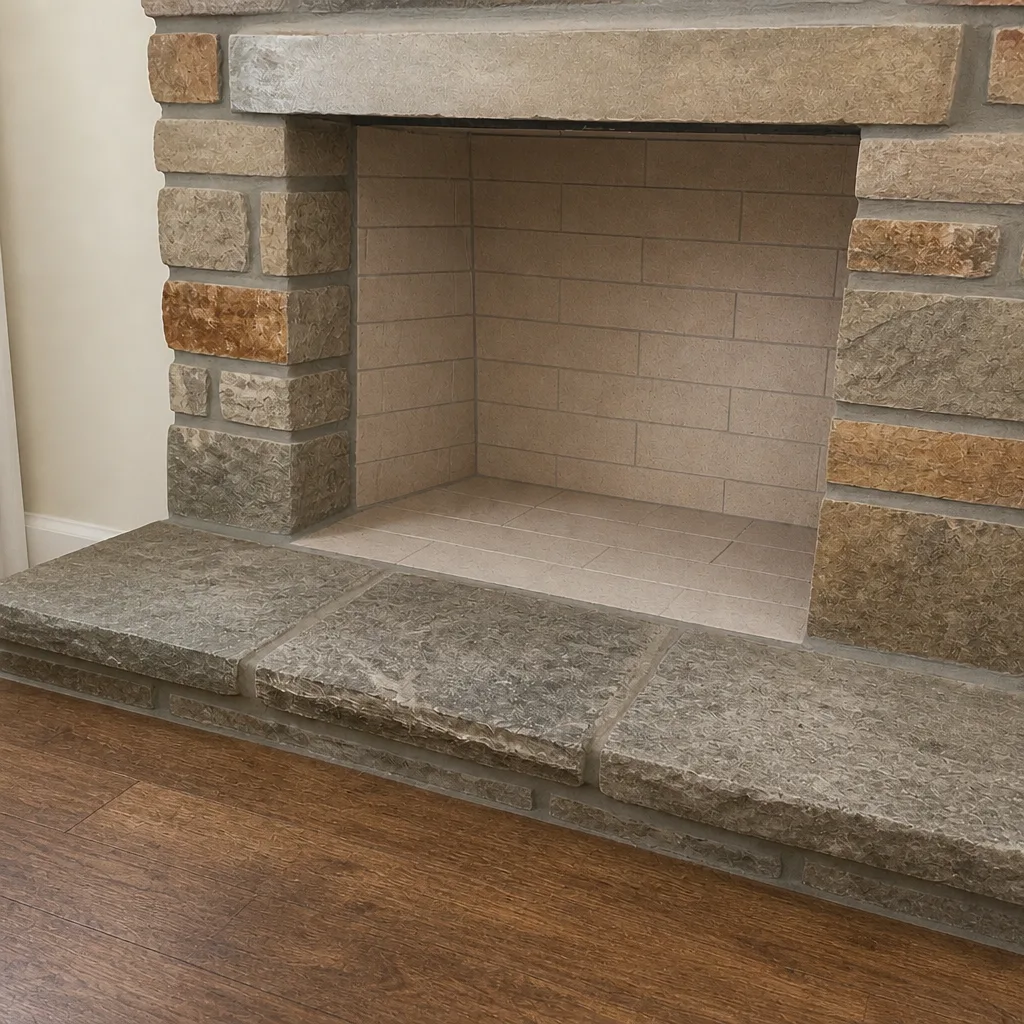
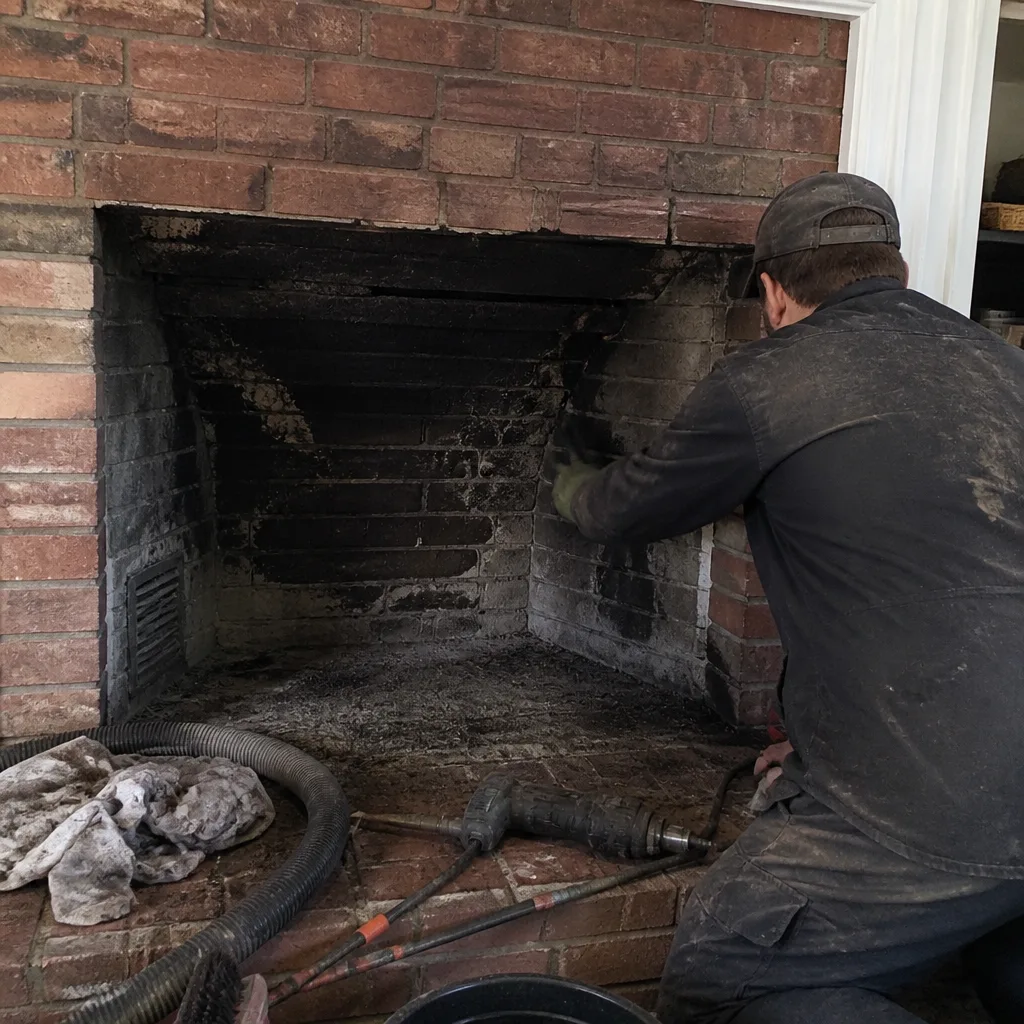
See the difference
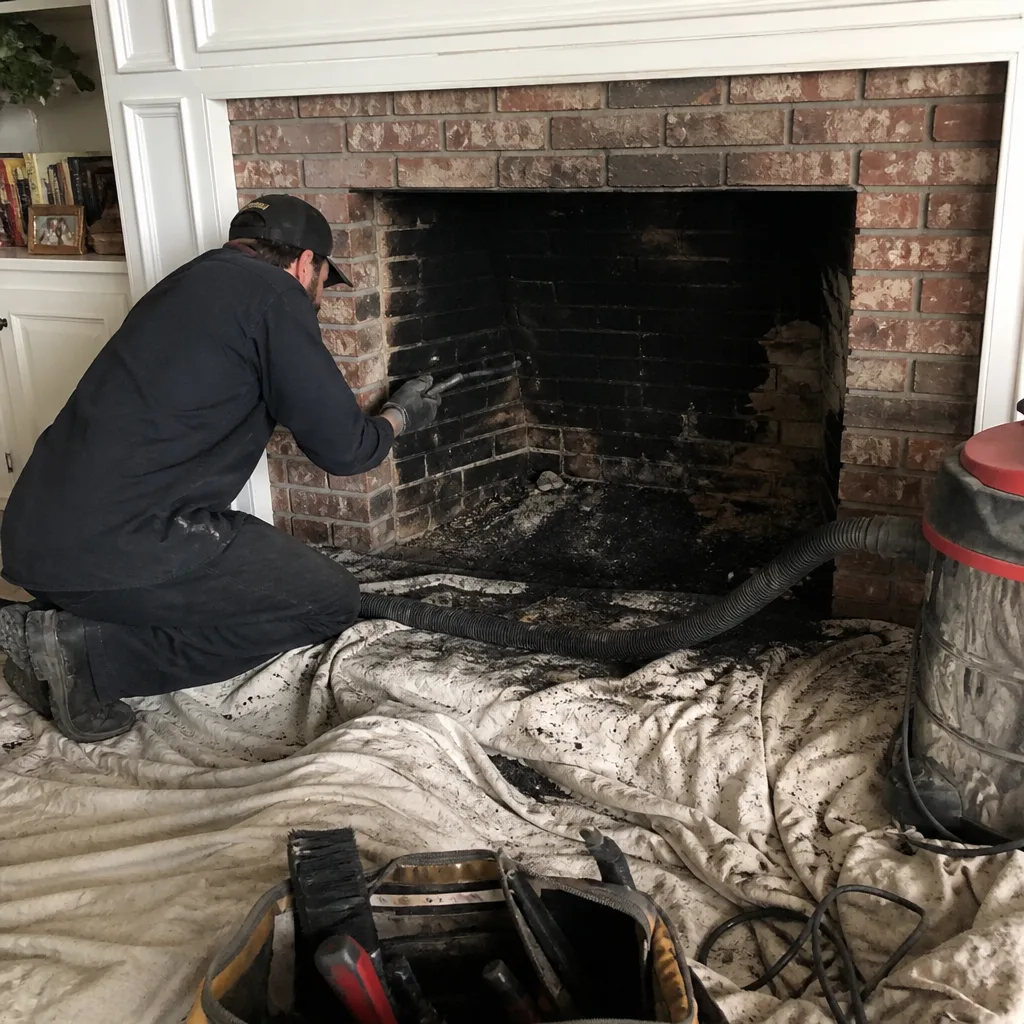 Before
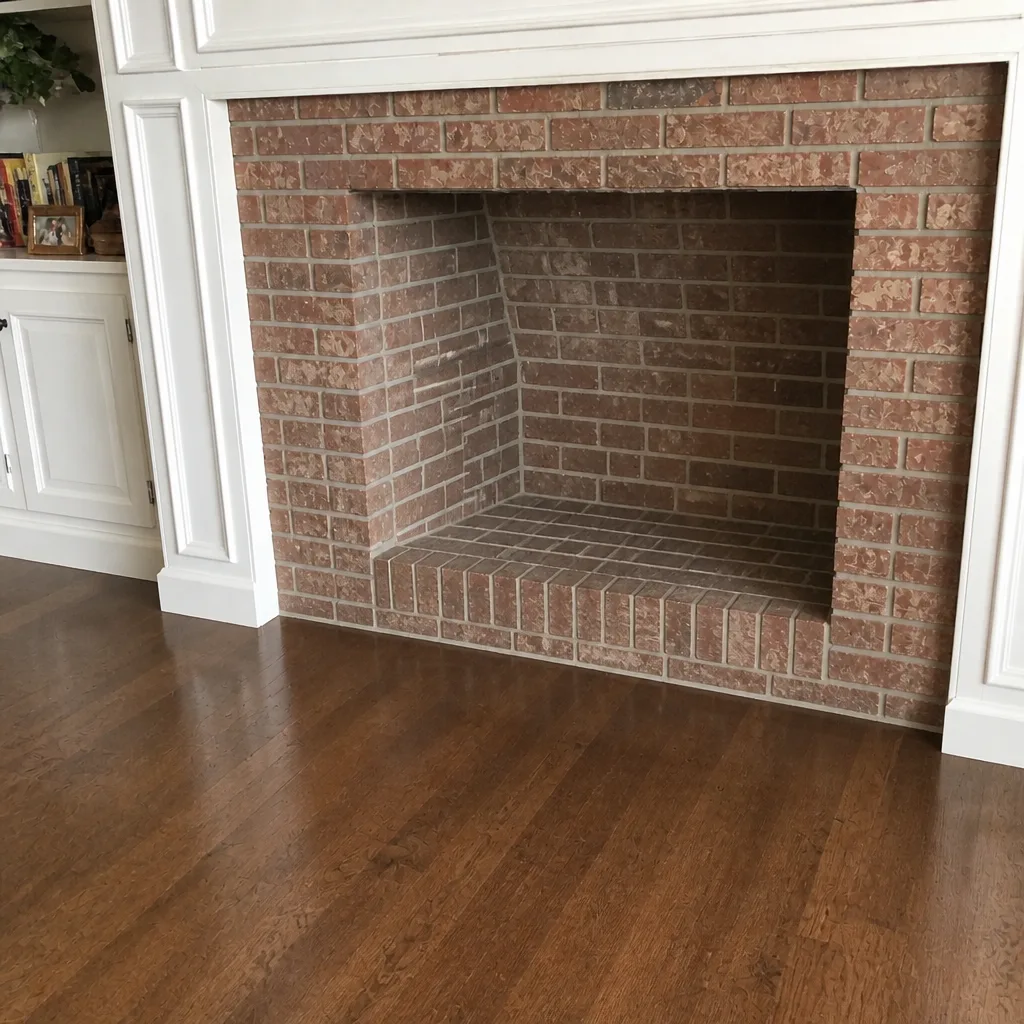 After
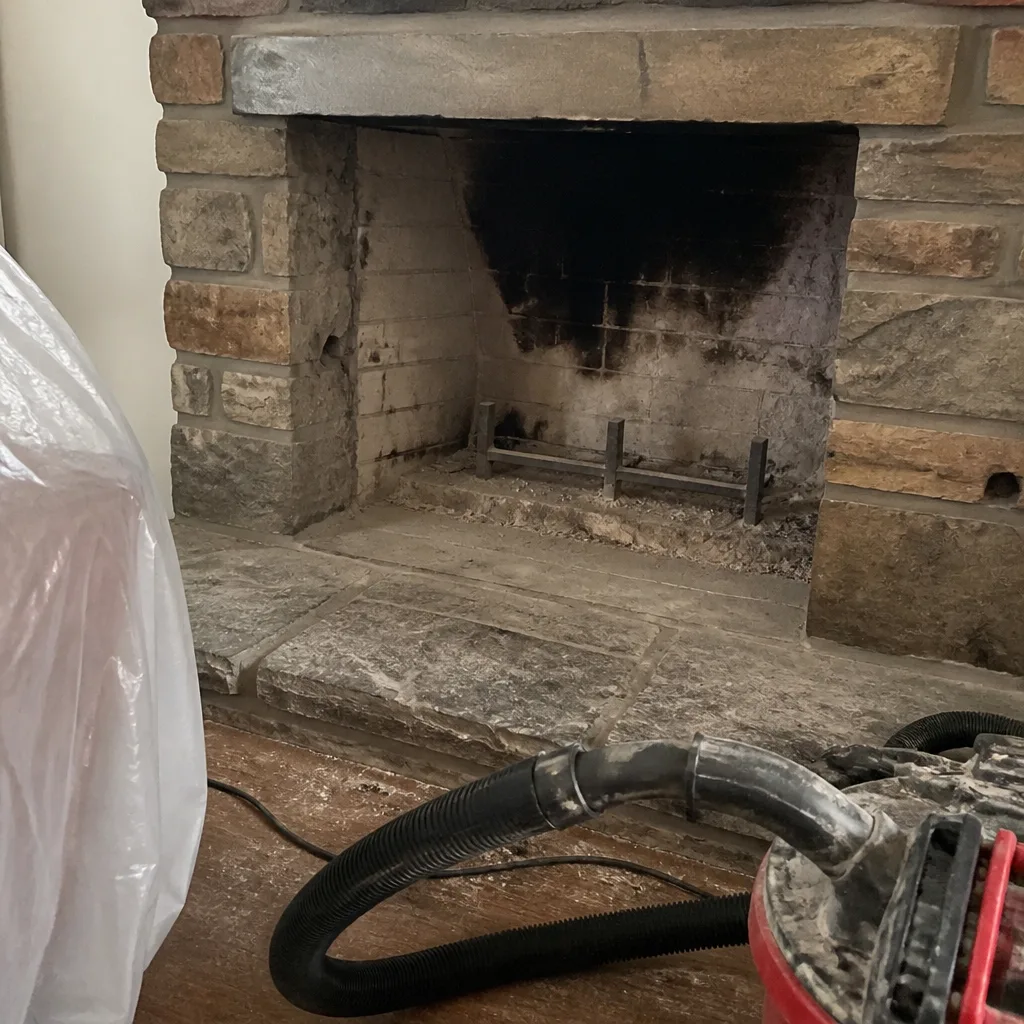 Before
 After
 Before
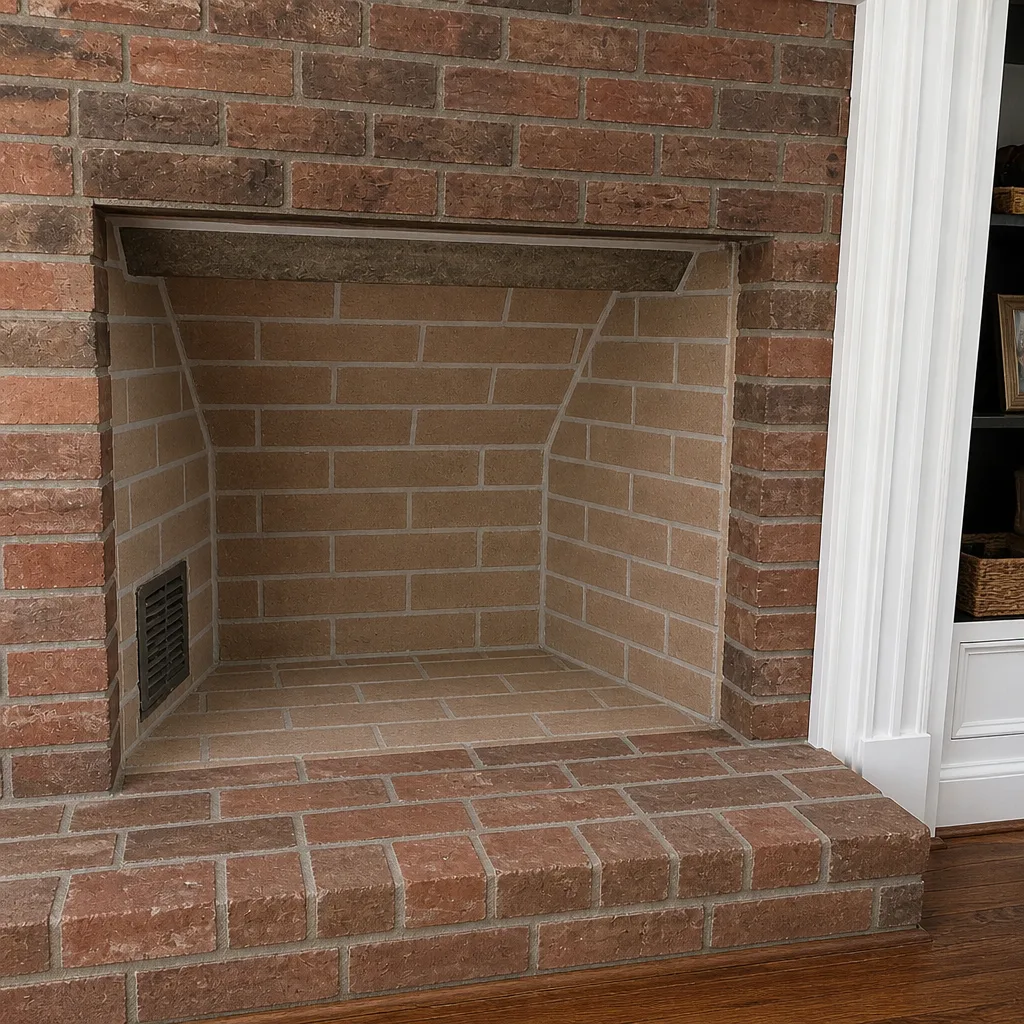 After
When to Call a Professional
Call a professional chimney sweep in University City whenever any of the following is true. You don’t have documentation of a recent inspection, which means you don’t know what you’re brushing. Your flue has offsets, shoulders, or a complex smoke chamber. You’ve noticed glaze on the flue walls, or you’re burning wood that isn’t seasoned. You’re selling or buying a home and the chimney lacks a paper trail. Your crown, cap, or damper has visible damage. Or you’re simply not sure what condition your liner is in, in which case the answer is a camera inspection, not a brush.
The inspection and the cleaning are one job, and they’re usually done together. There’s no reason to brush a flue you haven’t evaluated. Chimney Sweep University City offers free estimates in University City – call (855) 658-5324. Our technicians have up to 8 years of experience, and the estimate is per job, set by the written estimate, not by the hour.
The free estimate means you can find out what’s actually going on with the chimney before committing to anything. If the system is compliant and clean, you’ll know. If there’s a liner crack or a crown problem, you’ll see the photo. That’s the whole point of the visit.
Frequently Asked Questions
A residential chimney used for wood burning should typically be swept once a year, ideally before the burn season starts. If you burn frequently or you’re noticing performance issues – smoke rolling into the room, a weaker draw, or a smoky smell in the house – sweep more often or schedule an inspection sooner. The one-year interval is a general guidance, not a rule set in stone. Call (855) 658-5324 for an exact quote – estimates are free.
Creosote accumulates in the flue, and at the Stage 2 and Stage 3 levels it becomes combustible. A flue fire is the outcome when that creosote ignites, and a flue fire can extend into the framing around the chimney if the liner has cracks. Skipping a sweep also means skipping the inspection that catches liner cracks and crown damage before they become structural problems. The cost of skipping is a bigger repair, and sometimes a fire. Call (855) 658-5324 for a free estimate – a sweep plus inspection is the cheaper option.
Cleaning your own chimney is legal in North Carolina. The homeowner is allowed to sweep, brush, and maintain their own chimney. What DIY cleaning cannot do is produce a documented, professional inspection report, which is what a buyer, an insurer, or a later repair decision typically relies on. A professional sweep is what produces that record. Call (855) 658-5324 for a free estimate on a sweep plus inspection in University City.
Yes, in the narrow case where all four conditions apply: recent professional inspection on file, seasoned hardwood only, low annual use, and a straight single flue. If even one of those is missing, the calculation changes. Most University City homes don’t meet all four, usually because the inspection documentation is missing. Call (855) 658-5324 for a free estimate and find out which camp you’re in.
You need a new liner only if the existing liner is failed, cracked through, or improperly sized for the appliance. A sweep is enough when the liner is intact and the creosote is at Stage 1. The decision turns on what a camera inspection finds, not on what the sweep does. If the liner is sound but damaged, a HeatShield ceramic resurfacing can restore it without a full replacement. If it’s failed, a DuraFlex liner is the standard repair. Call (855) 658-5324 for a free estimate and we’ll show you the camera findings before recommending anything.
A professional chimney sweep in University City typically runs in the low-to-mid hundreds of dollars, and a professional inspection is priced separately depending on whether it’s a Level I, Level II, or the diagnostic scope you need. The exact price is set per job by the written estimate, not by a flat advertised rate, because the scope varies by system. Ask for the written estimate before booking. Call (855) 658-5324 – estimates are free.
One more question worth addressing directly, because it’s the one homeowners ask us most: how do I know you’re not just telling me I need thousands of dollars in liner work? The answer is that every recommendation gets photo documentation from the camera inspection, and you see the photos before any decision. If there’s a crack, you see the crack. If the liner is sound, you see a sound liner. And we say plainly when a repair can wait, because a recommendation that can’t be backed up with a photo isn’t one we make.
The Bottom Line
DIY chimney cleaning is a real option, but only under narrow, documented conditions: a recently inspected system, seasoned wood, low use, and a straight single flue. Outside those conditions, the brush removes soot while the diagnostic work goes undone – and the diagnostic work is where the real value lives. Liner cracks, offset blockages, animal nesting, Stage 2 and Stage 3 creosote, and crown damage are all invisible to a brush and all visible on camera. The savings comparison changes when you include the cost of missing a diagnosis. A professional sweep in University City pairs the cleaning with the inspection, gives you photo documentation, and gives you a written report you can rely on for a home sale. The Chimney Sweep University City team covers sweeping, inspection, cap and crown, fireplace repair, and structural chimney repair under one call, so a diagnostic finding can move straight into a repair rather than a referral. If you’re not sure which side of the line you’re on, a free estimate tells you.
To book a sweep plus inspection in University City, call (855) 658-5324. We answer 24/7. Fast dispatch from 7am to 7pm, Sunday through Friday. The estimate is free, the price is set per job by the written estimate, and the camera findings come with photos so you can see what we see.
Written by the team at Chimney Sweep University City.